
The Movement Changing The Relationship Between The US And Mexico
A coalition of Latino lawmakers in the United States and legislators in Mexico could change the relationship between both countries

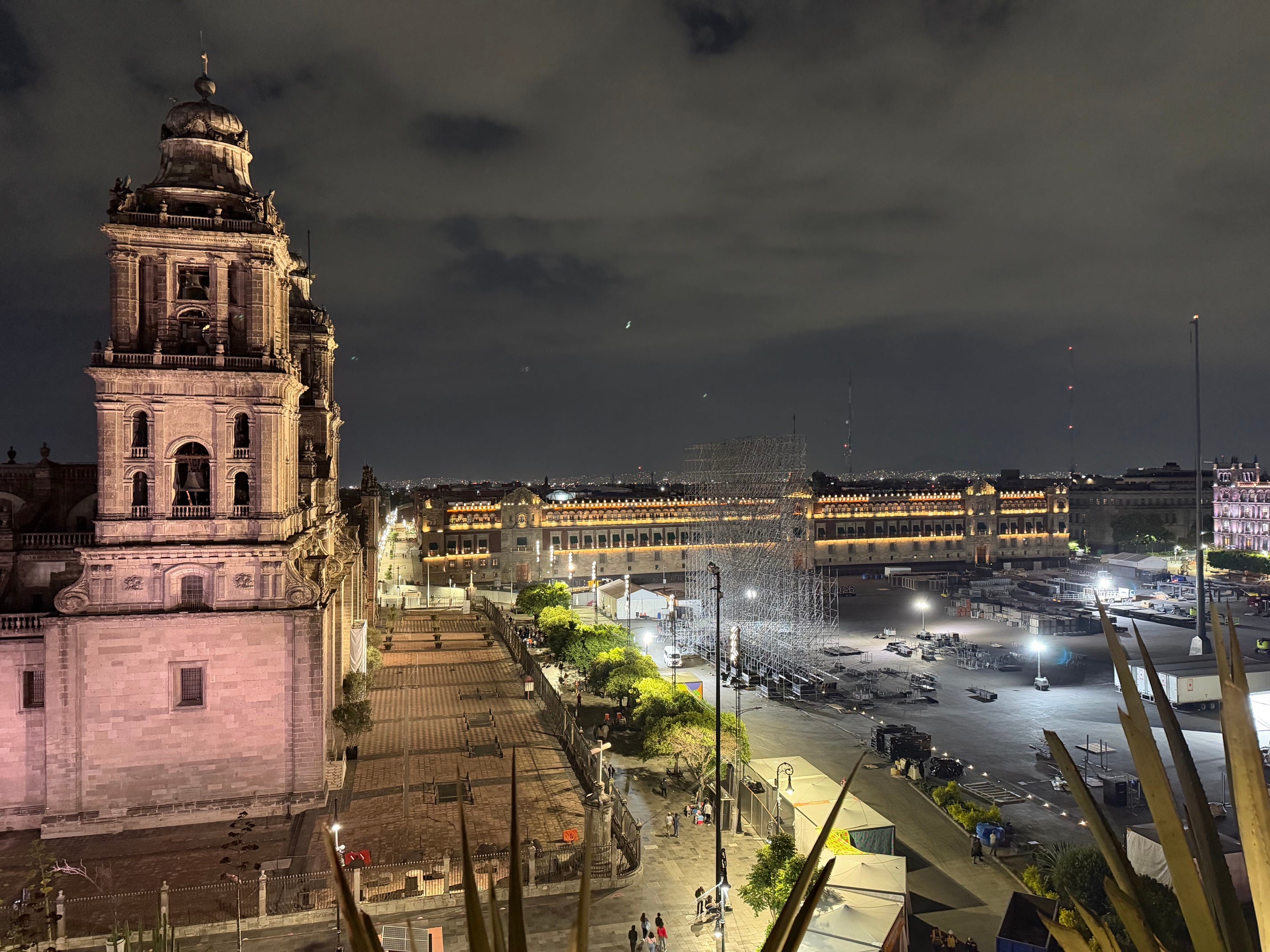
Last week I sat on stage with the chairman of the Mexican American Legislative Caucus of Texas. A stately gentleman named Ramon Romero, Jr (D) who I hit it off with immediately. Just before we enetered the stage he reminded me that Texas has the oldest Hispanic legislative caucus in America and that it isn’t just the oldest but it’s the only bi-partisan caucus in the US. He also gently reminded me that the caucus focuses primarily on economics and trade.
“California has a lot to learn from you,” I whispered to him as we took the stage.
We were both invited to have a discussion in Mexico City in front of a room I had never spoken to before. Not just a room of Democrats. Not just a room of Republicans. A room of legislators and policymakers from both the United States and Mexico, convened under a name that tells you everything: MAPA, the Mexican American Policy Alliance.
Having spoken to Latino organizations for 35 years about politics, Latino voters and the issues the community cares about, I was immediately struck by how different this conference was. This was a new organization that convenes the Latino leadership of legislatures in every state in the US with legislators from Mexico for one common purpose: To enhance the relationship between our two countries and the lives of Latinos therein.
This was no ordinary conference of Latino leaders. This was overwhelmingly a discussion about economics, trade and how both countries could lift each other up by partnering, despite the barriers being erected by the Trump administration. Mexicans were doing what we do best on both sides of the border - we were finding a way.
I have spent a decade studying how Latino voters are redefining American democracy. I wrote a book about it. I called it The Latino Century, and I gave it a subtitle that I believed then and believe more now: how America’s largest minority is transforming democracy. Nearly, every essay I have written on this Substack has been in service of one argument. Latino voters are not converting to a party. They are walking away from both. I have called it dealignment, not realignment, because realignment assumes loyalty simply changes hands. What is actually happening is that loyalty itself is dissolving.
I built that argument looking in one direction. What does dealignment mean for Latinos. What does it mean for the two parties that have taken them for granted or written them off. What I had not done, until a phone call from MAPA forced me to, was turn around and ask the question from the other side of the border. What does this transformation mean for Mexico.
It’s a brilliant quesion that shows the maturation of Latino opinionleaders, policy makers and thinkers considering far larger quesions than those that have defined Latino politics over the last generation. These policymakers were forging new ideas and questions during this dark time of discrimination and American retrenchment to the nativistic fears that once adavnce Americas growth strategy but now serve as its primary reason for isolationist and protecionist thinking.
So how are changing Latino voters in the United States emerging to tackle this dynamic as emerging leaders in the United States?
That is the question I carried into the main hall last week.
It is a strange thing to realize you have been half blind to your own subject for ten years.
Here is the question I put to legislators from both countries, from both parties, in that room. If the political identity of Mexican Americans is no longer fixed, no longer predictable, no longer captured by either party’s old playbook, does that make the relationship between our two countries more stable or less? Does it open room for agreements that were politically impossible a generation ago, or does it strip away the very loyalties that used to make cooperation possible in the first place.
Take immigration. For thirty years comprehensive reform has died in Washington because it always required one party to override its own base. A dealigned Latino electorate changes the arithmetic. Neither party can assume it owns those votes, and neither can afford to lose them. That should make a deal more possible. It might also make it less possible, because a electorate that punishes both parties equally gives politicians no safe path to yes. I did not have the answer when I walked into that room. I suspect the legislators sitting in front of me did not either.
Take security. Narco trafficking has never been a border issue. The policies of the United States have about as much to do with the rise of Mexican cartels as any country given we are the consumer market for their product. It is a binational governance failure, and for years American politicians have treated it as someone else’s problem (Mexico’s) to solve unilaterally, with a wall or a raid or a speech. A political class on both sides that is less captive to old party orthodoxies might actually be able to build the kind of joint enforcement architecture that has never existed because neither country’s domestic politics would tolerate looking too cooperative with the other.
Take trade. Take investment. Mexico needs private capital to build an economy strong enough that young people do not have to walk across a desert to find work. That is not a talking point. That is the single most effective immigration policy either country could pursue, and it depends entirely on something unglamorous: property rights. Investors do not build factories in places where the courts cannot guarantee they will still own the factory in ten years. If dealignment produces a generation of Mexican American legislators with real standing in both capitals, they may be the only people credible enough to push that reform in Mexico without it looking like American interference.
And then there is the question nobody wants to say out loud in either country. Wealthy Americans, mostly white, mostly retired, priced out of their own retirements at home, are moving to Mexico in growing numbers. Mexico City has neighborhoods that increasingly feel like Austin with better food. Rents climb. Longtime residents get pushed out of the blocks their families have lived in for generations. It is gentrification, and it is happening to Mexicans in Mexico, driven by Americans fleeing the economic wreckage of their own country. I do not think either government has begun to reckon with what that means politically, on either side of the border. Add to that, we are on the cusp of an enormous wave of American retirees looking south to retire in a beautiful place they can afford and it becomes readily apparent that we could see enormous transfers of dollars shifting south of the border to rival the remittances of Mexican workers sending money home. This will have major impacts on the health care systems of both countries.
What ties all of this together is the thing I keep coming back to in this Substack. American democracy used to be organized geographically and ethnically in ways that were stable and predictable. Precincts. Neighborhoods. Party machines built on identity that did not move.
That world is gone.
What is emerging instead is a politics built on economic ties, cross border families, and ethnic identity that spans a national boundary rather than sitting neatly inside one. Mexican Americans are not a domestic voting bloc anymore. They are a hinge between two nations, and neither nation has fully figured out what to do with a hinge. But that’s not stopping this new generation of politicians from asking all the right questions.
New organizations are popping up to ensure that these cross border and pan-ethnic relationships flourish. US lobbying firms are rapisdly opening up offices in Mexico City, often staffed by Latino former officials and staff members. Genuine professional and business relationships between the US and Mexico are developing and growing and they are overwhelmingly led by Latino lobbyists, staff and politicians who are poised to redefine foreign policy, trade agreements, immigration discussions and security architecture long before the federal government even starts to see the problems arising.
I left that room with more questions than answers.
Admittedly, that is a strange place for a strategist to stand. But I have learned over thirty years that the moments worth writing about are the ones where the old framework stops explaining what you are looking at.
I felt as if a whole new world of understanding was opening up - because it is.
Last week was one of those moments where the future appears to you like a clap of thunder and a shock of lightning. A Mexican American political class is growing by the year in state legislatures and congressional delegations across this country. A Mexican political class is watching that growth and asking what it means for them. Somewhere in that hotel room in Mexico City, the next chapter of both democracies was being written, and very few people in either federal government has any idea that everything we know about the global order for North America is about to change.
A whole new world should be opening up, it's about time, renew, rebirth, a whole new dynamic, the framework will be a more positive to both nations that affects multiculturalism and peace
I rather like how the acronym means map in Spanish. It is a meaningful synthesization of what we can do for one another. This could and should carryover into repairing our relationship with Canada, perhaps including scrubbing our deal taking some of the tolls on the Gordie Howe Bridge which Canada alone paid for.