
When Sanctuary Explodes In Violence
Puerto Vallarta is my hometown. It took a violent clash to make me realize it.

I fell in love the way it’s supposed to happen - unexpectedly.
This time it was with a city. And so it is when you find the love of your life, you know that this one is different. It changes all of who you are. You feel like colors are more vibrant, food is more delicious and happiness emanates from your core. You smile a lot more and for no reason.
Puerto Vallarta. It is where I feel most at home.
My experience is not uncommon. I have met literally hundreds of Americans and Canadians over the twenty years I have owned a home there who all had a common thread: They unexpectedly fell in love with this magical place and knew they would never leave.
Not a lot of places on our planet can say that.
I planned to visit years ago during a particularly difficult time in life. The personal challenges I was facing then crashed into a particularly difficult campaign cycle and I was depleted emotionally and was physically spent. Just exhausted.
My wife at the time and I planned to get away to some isolated destination but decided we’d probably want some amenities that a remote desert island could not provide. We opted for a resort town instead. I had put my business on hold and was taking a sabbatical from my own existence when a travel agent (remember those?) suggested Puerto Vallarta. A serene Mexican pueblo with enough modernity to make you feel safe.
We planned on a ten day getaway the way you visit a place you’ve read about, check the boxes, take the photos, leave. Get a massage. Order a margarita.
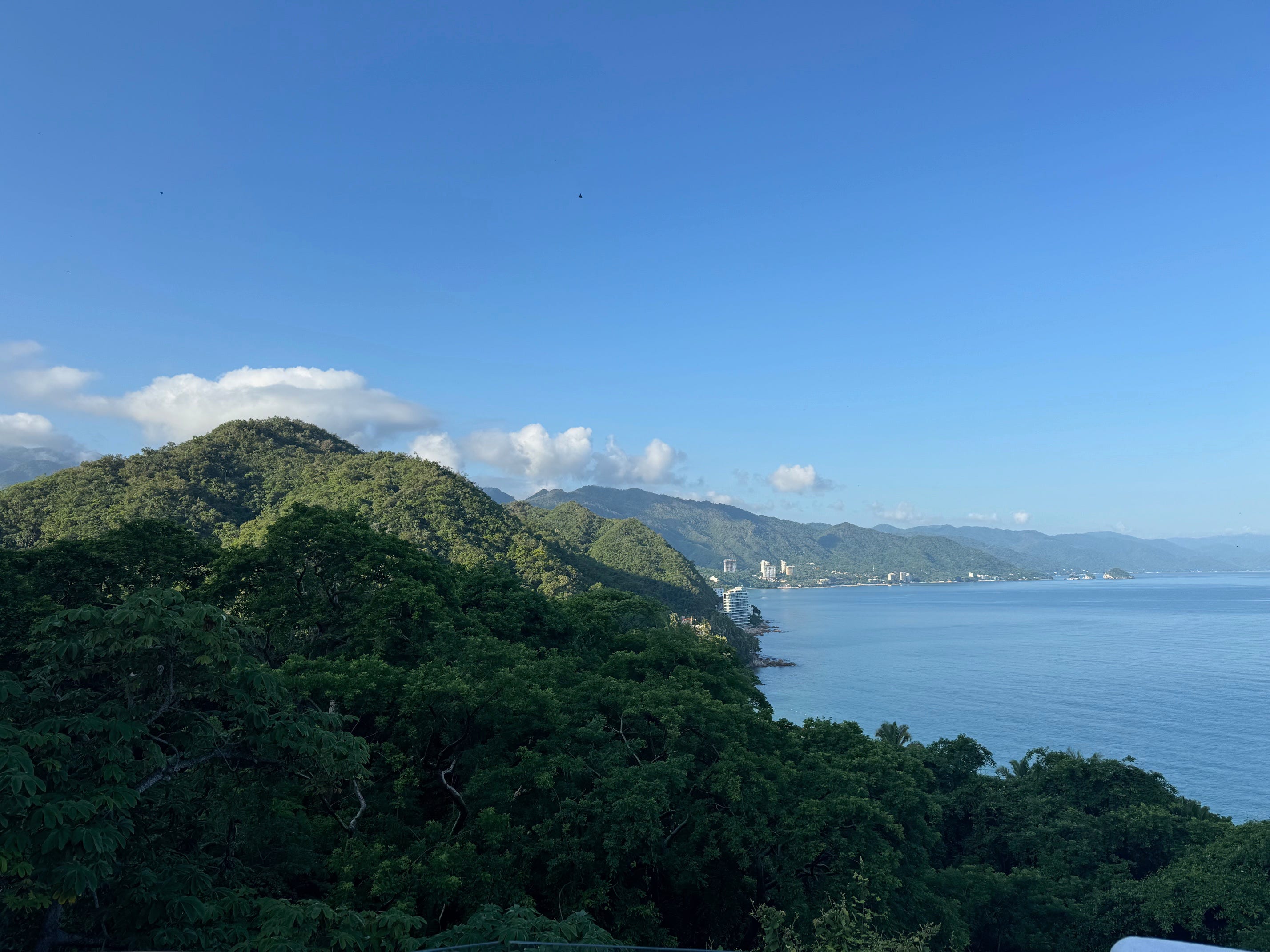
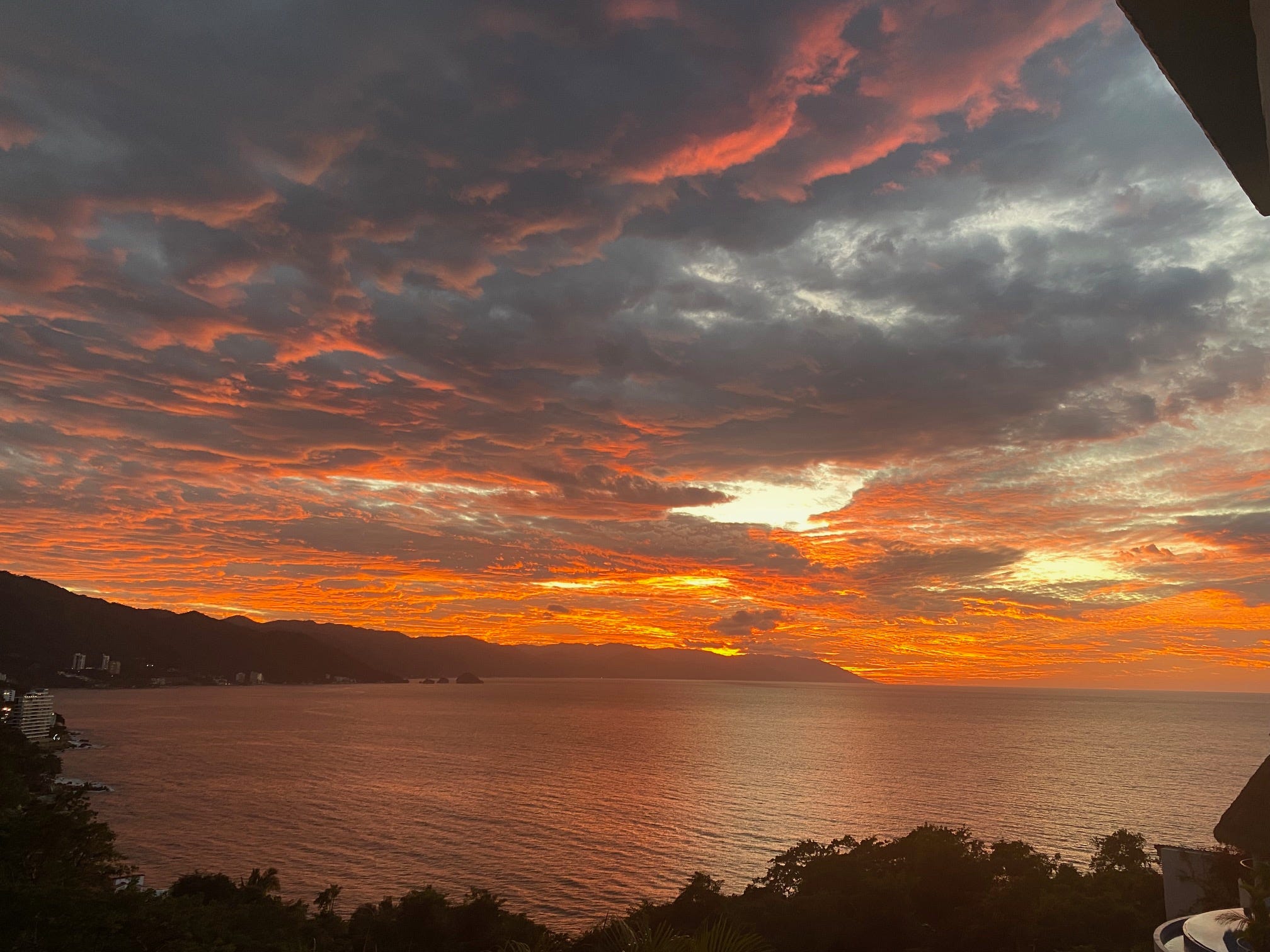
That’s not what happened. What happened instead was the light on the bay at dusk hit me in a way I wasn’t ready for. The sun felt different on my face. I slept like I hadn’t in years. The Sierra Madre tumbled into the Pacific like it couldn’t help itself - the majestic green jungle mountains crashed into cerulian blue sea. I could literally feel my ancestral people welcoming me back, reminding me that this was home.
I found a joyous people.
Poor by our American standards of material wealth but richer than us by a mile in gratitude.
Enchanted more by the inner peace of the people there than the calm waters of the bay, I looked for locals to connect with. I had a conversation with an older Mexican woman I met in the old downtown that first trip - a section known as the Zona Romantica. It was one that would change my life. In most movies this would have been a scene with a quiet old Japanese man making sushi over a counter - for me it was an elderly Mexican abuelita making street food. She looked like my own Nana…they all do. Her name was “Emerita” which I discerned from the others working around her and sometimes calling out her name. She was undistracted. She was methodically making tortillas at a taco stand frequented more by neighbors than tourists.
I sidled up and watched her. I was quiet and observed saying nothing at first. She never looked up to see who had taken a seat right in front of her. She was focused on the immediate task, not frenzied and not stressed - more like she was delicately practicing heart surgery. I was mesmerized watching for the longest time for something extraordinary to pop up out of the mundane. But no, the mundane was the extraordinary. That was the lesson.
I joined her in her trance of rolling out and then pounding masa to perfection over and over again as if we were both meditating. Once the exact thickness had been achieved she lay the tortilla on the griddle to cook and the process would start anew.
I felt present for the first time in years. Time had slowed. I could feel my own breath and heart beat. I could smell the carne asada grilling beside us. The sea air was an incomprehensibly perfect temperature. It was like tortilla tai chi.
After some time had passed - I have no idea how long - I broke the silence and in my pocho Spanish asked, “Is it always like this here?”
She stopped and looked up and into the distance filing back through the days, months and years in her mind.
“Yes. Always,” she said and then went back to her daily meditative practice of making corn tortillas by hand.
That was the whole conversation.
I stopped being a tourist somewhere around year three of owning a home there. Eventually I stopped leaving. Yes, of course I would go home to the United States and strap on the dented armor, beaten shield and sharpened sword required to have a career in US politics but emotionally I wasn’t leaving.
More and more Puerto Vallarta was my home even if I was only there a few weeks out of the year.
A place like that becomes part of you. It becomes sanctuary — the word I keep coming back to, the only one that fits. Not a vacation. Not a getaway. A place where something in you exhales deeply in a way that you can not in the States.
Last Sunday, my sanctuary filled with smoke.
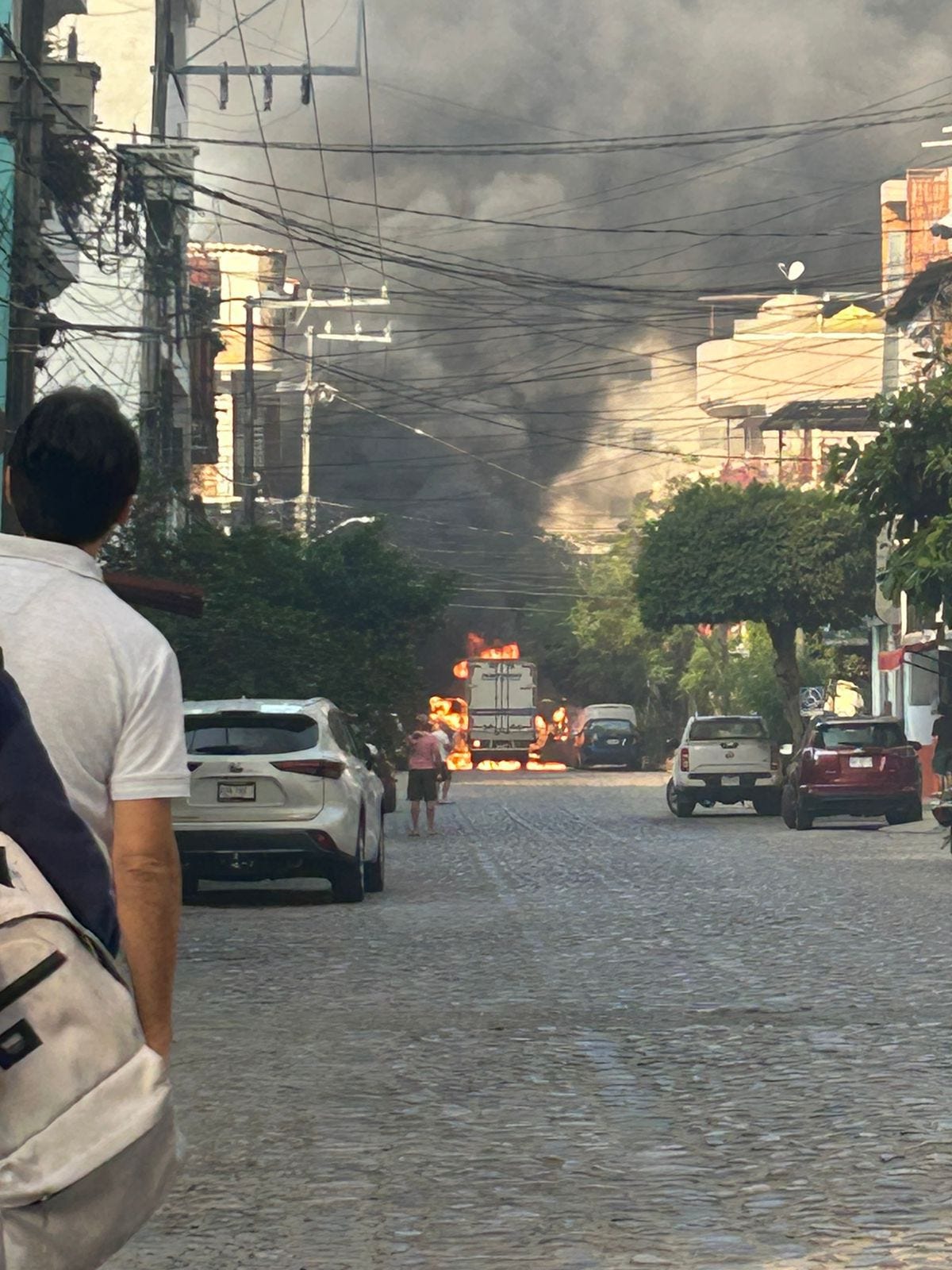
Cartel members torched buses and vehicles across Jalisco state within hours of the Mexican military killing “El Mencho”. Nemesio Oseguera Cervantes, leader of the Jalisco New Generation Cartel was surrounded and gunned down at his mountain hideout in Tapalpa. Roadblocks went up. Flights were canceled. The U.S. Embassy told Americans to shelter in place. Tourists who had been by the pool on Saturday were rationing food on Sunday and queuing two hours for tortillas on Monday. Smoke poured over the hotel zone. At least 73 people were killed — cartel members and National Guard troops. The images went everywhere. The videos went viral. And just like that, in the span of a Sunday afternoon, a city that tens of thousands of people love — that I love — became a symbol of danger, a cautionary tale, a place that cable news anchors said gravely while shaking their heads.
I’ve watched this happen before.
I know how it works.
A place accumulates its reputation over decades through the slow, patient labor of people like Emerita who build things there, who raise families there, who fall in love with it — and loses it in an afternoon. The algorithm doesn’t care about the decades. It cares about the smoke.
But something else curious happened. It happened as my phone was blowing up with texts wondering if I was in Puerto Vallarta. Was I safe? Was my home safe?
No. I wasn’t in Puerto Vallarta, but I wish I was.
I felt like a place that has provided me with so much peace and calm in this turbulent world needed me. Silly, I know. Being there would do nothing, but I felt the need to protect it even though I was helpless to do anything at all.
Fear is a funny thing.
It’s often most pronounced when you don’t know what the source is and what it’s trying to do. It’s that unknown that gives it power over us.
I found myself telling my American friends who only know about Mexico through the lens of FOX News that Puerto Vallarta is far safer than any city of similar size in the United States. I was saying that as cars and buses were burning on its streets and as narco henchmen were causing havoc as a way of sending a message to their own government for capturing and killing the head of their organized crime syndicate.
But its true and I believe that to my core.
So I was keenly aware of the peculiarity of explaining to my American friends that there were two things happening that made me more convinced that this was nothing more than an elaborate - if violent - message being sent: First, civilians were not targeted. In fact they were methodically excluded and removed from the violence and mayhem. For the record, in the US random violence is designed to harm or kill civilians and that is the point - this was the exact opposite.
Second, there were no armed federal soldiers in the city fighting back against the cartels. If you’ve ever been to Mexico you know that fully dressed “federales” are a ubiquitous presence along with their fully automatic rifles. None of that was present.
Both of these strongly pointed to this being a message and nothing more. The Mexican government was allowing them to throw a tantrum and send a message. Violent confrontations were secluded and limited to Mexican soldiers and cartel footmen. I am not excusing any behavior, rather I am trying to add my own personal footnote to the fear I feel - or don’t - in each country.
On its face none of this seemed to make sense, even to myself. But I felt it so deeply I felt compelled to dig deeper to figure out why.
What I have found myself thinking about is the mathematics of fear. The way we measure danger so selectively, so conveniently, depending on where it happens and who it happens to. At least 73 people died in Mexico last weekend in the violence that followed El Mencho’s killing. While none of these reported were civilians its a tragic number. It was horrific. It was unprecedented in scope for Puerto Vallarta specifically. It dominated global news coverage for days.
Now let me tell you what didn’t dominate global news coverage: the 45,000 Americans who die from gun violence every single year. In fact, according to statistics in the US, 40 people are killed by gun violence every day. That means more innocent civilian people have died in the US than soldiers or cartel members since the weekends violence in Mexico. And by the way, private ownership of guns is illegal in Mexico. 90% of the weapons used to kill those soldiers and arm the cartels were made in the USA.
The children’s hospitals in this country have entire wings dedicated to pediatric gunshot wounds. School shooting drills are now as routine as fire drills because they’re more likely. So much so that children across America do without remarking on them, because this is simply the world they were born into. Thirteen children were killed in Uvalde on a Tuesday morning in May 2022. Fewer people canceled their Texas vacation plans than canceled their Mexico trip last week. I know this because I watched it happen.
I’ve been watching it happen for years.
Safety depends heavily on location and context. Both within the United States and Mexico. Mexican resort towns are safer than tourist towns in the US…even after this past weekend and especially for American tourists. The United States — the country whose citizens are advised to “exercise increased caution” when traveling south of the border — has a gun homicide rate that surpasses most of the countries on the State Department’s own warning lists. We are telling people to be careful in Mexico while American children practice hiding in closets. I’m not making a political argument. I’m making a mathematical one. The fear does not match the facts. It never does when the violence happens somewhere that looks foreign, somewhere that speaks a different language, somewhere that our media has spent decades casting as the dangerous other side of a wall.
What happened in Puerto Vallarta last weekend was real. I’m not minimizing it. The chaos was genuine. The fear tourists felt was legitimate. Being stranded without food or information in a city under a shelter-in-place order is terrifying, full stop. But here is what is also true: not a single tourist was killed or even targeted. I’m not even sure any Mexican civilians were killed but I know none were targeted. The violence was cartel retaliation against the government that killed their leader. It was not a war on the city itself, not an assault on the people who live and love and eat and swim and watch the sunset there. Puerto Vallartan’s know the difference, even if the global news cycle doesn’t. What wounds me — and I choose that word deliberately — is watching a place absorb this kind of blow to its reputation and knowing that the people who will pay the longest price aren’t the cartel members or the government soldiers.
It’s the restaurant owners in the Romantic Zone. The fishing boat operators at the marina. The women selling embroidered tablecloths on the malecon. The taxi drivers who have been taking tourists to the airport for twenty years. The people whose livelihoods depend on the world believing that this place is the sanctuary it actually is.
Their city got caught in the crossfire of a government operation against one of the world’s most wanted criminals. The guns that were used were made in the United States and handled by cartels whose market is the United States and the violence that was unleashed was because of a United States policy that found that solution easier than rooting out the true cause of the crime: America’s insatiable drug habit.
They will spend years recovering from the coverage of one Sunday afternoon and recovery will be gauged by how many Americans they can reassure to come back and be served by them.
The famous quote, “Poor Mexico, so far from God and so close to the United States,” is widely attributed to Porfirio Diaz, who served as the President of Mexico for most of the period between 1876 and 1911. The saying reflects the historical tension and complex relationship between the two nations and the challenges they faced as the US became a rapidly expanding and industrially dominant superpower more than happy to exert that dominance and outsource its problems to its southern neighbor.
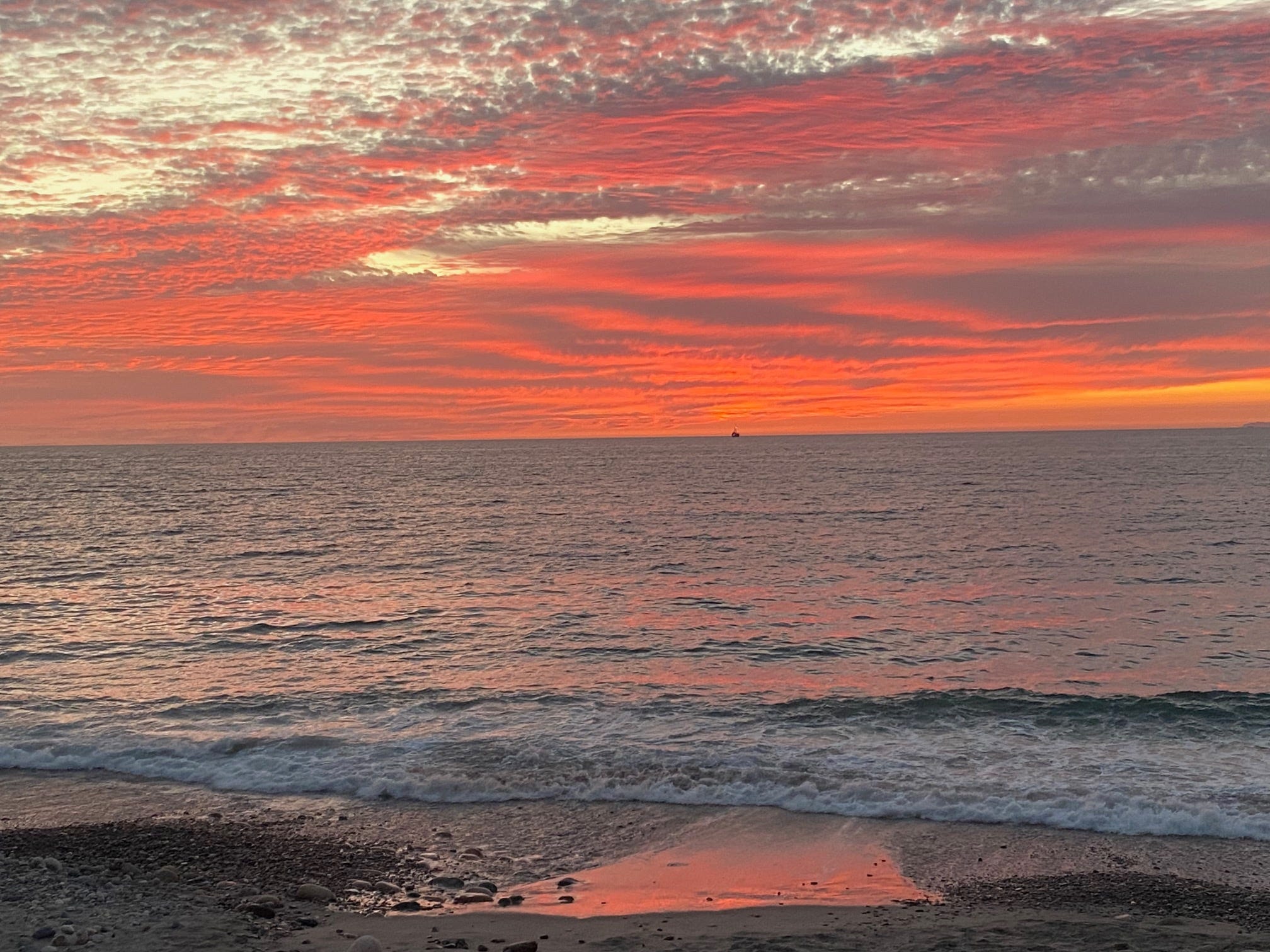
I found sanctuary in Puerto Vallarta. I found it because I was looking for it, and because the city offered it genuinely, generously, the way Mexico so often offers things to people willing to receive them. That hasn’t changed. The light on the bay at dusk is the same light it was last Saturday. The carne asada is still be grilled in town.
I wonder about Emerita. The little old lady making tortillas meditatively on my first trip to Puerto Vallarta. Was her inner peace shattered? Something tells me it wasn’t.
But I’m also aware live in a country where I have sent my children to schools that hold active shooter drills. Where mass casualty events have become so routine that we have a genre of news coverage for them, a standard format, a familiar sequence of reactions. Where we have decided, collectively, that this is simply the price of living here. I don’t say this to make anyone feel good about what happened in Puerto Vallarta. I say it because I think we owe it to the places we love — and to ourselves — to be honest about what we’re actually afraid of, and why.
Once you understand these aspects of Mexico, everything changes. I have been blessed to spend a lot of time in Mexico City and Monterey for work. American colleagues always freak out when I go for long rambling walks in these cities. “It’s not safe” is the inevitable comment. I just shrug. They just don’t understand. I went to junior college in Oakland, CA. Not much phases me. But the contrasts that you point out here are really important for people to understand.
This was beautiful and also makes perfects sense.