
Do Protests Work?
Rachel Maddow said something that made me stop in my tracks - So I dug a little deeper. What I found was illuminating.

Do Protests Work?
Like a lot of us I have spent far more hours in the early days of 2026 doom scrolling through my social media feeds than I had hoped but alas, here we are.
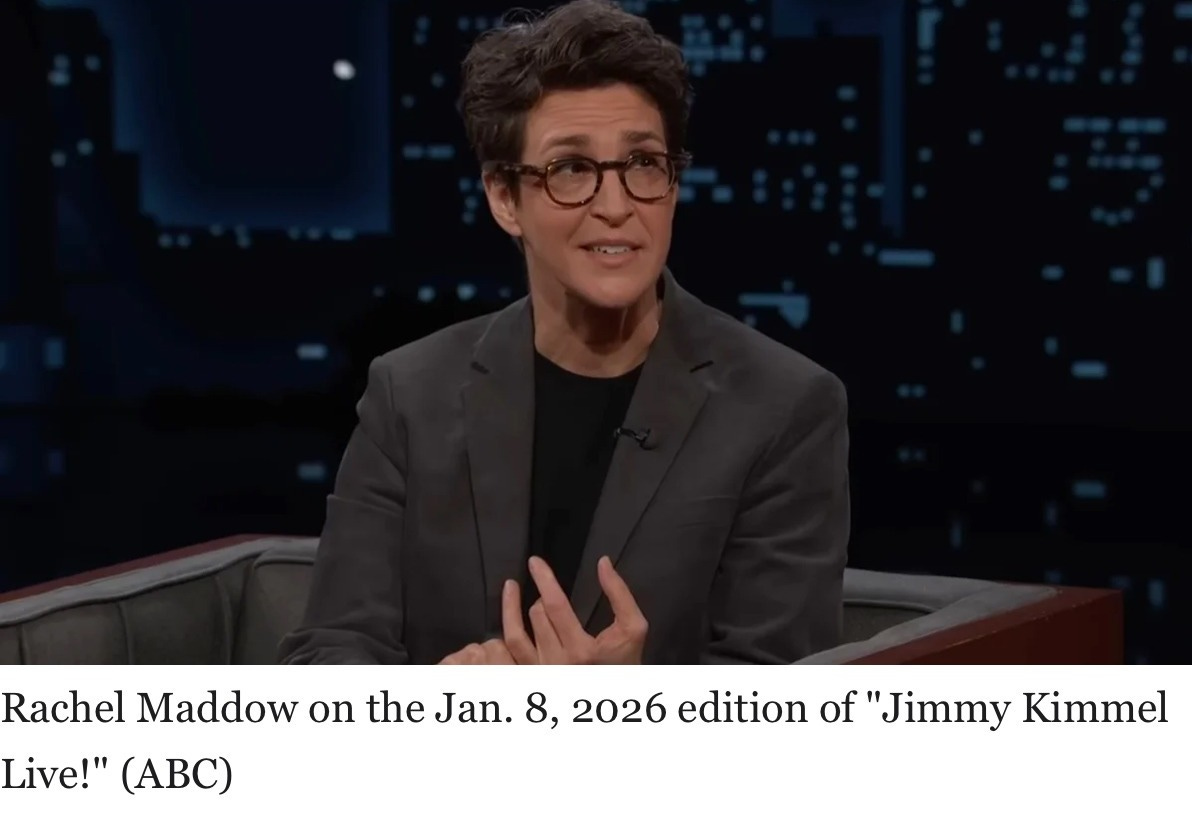
Last night I came upon a short video of Rachel Maddow on the Jimmy Kimmel show and the host asked her if she thought that the protests in the wake of the Renee Good murder would have any effect - or for that matter if protests actually did anything productive at all - or were they just a way for already angry people to share their anger together.
Maddow responded with something that caught my attention.
“In political science terms, there’s what’s called the 3.5% Rule, which is that if you look at authoritarian regimes of various kinds all over the world over the last century, once you have 3.5% of a population protesting nonviolently against a dictator or an authoritarian, that is essentially an unstoppable force,” she explained. “It’s not that much larger a number than what we’re already seeing in the streets against Trump.”
In over three decades of professional political consulting I had never heard this before and it seemed to both make sense and no sense at all at the same time. So I dug a little deeper to see what researchers and social scientists said about it.
It seems there’s something to it.
The murder of Renee Nicole Good by an ICE agent in Minneapolis ignited something that may have been building over the past year. Within days, hundreds of cities rallied across the country—Connecticut, Minnesota, South Florida, Texas, California— red and blue alike, holding signs reading “ICE Out For Good” and demanding accountability from a federal agency that had just killed an unarmed woman. The spontaneity wasn’t just remarkable. It was revelatory.
This wasn’t protesters dutifully responding to organizational emails. More importantly, it wasn’t what the MAGA critics of such rallies were suggesting…that this was somehow the function of paid protestors showing up in the dark of winter for a handout or a couple of bucks from George Soros. This was Americans deciding, independently and simultaneously, that silence was complicity. They found each other in town squares, downtown intersections and outside federal buildings, connected by shared outrage and a conviction that this moment demanded witness.
And it followed something equally unprecedented. The No Kings rallies last October became the largest coordinated protests in American history. Not the largest since the Women’s March. Not the largest of the decade. The largest ever. Hundreds of thousands flooded streets across the country, creating a visual statement against authoritarianism so massive it redefined what we thought possible in contemporary American politics.
And those October No Kings rallies followed the huge protests in June, just a few months earlier. As I wrote at the time these aren’t just sustaining - they’re growing in size and intensity.
Something is awakening in this country. The question isn’t whether protests work. The question is whether we’re witnessing the birth of a movement capable of fundamentally altering American politics. A new type of civic engagement that has been asleep for the better part of a generation - since at least the Vietnam war.
I’ve been asked a lot over the past few weeks: What can I do? The short answer is everything and anything but not matter what you do make the choice to be visible about it. Use your voice and others will join the choir. Build momentum. If you’re a lawyer - offer pro-bono services to a non-profit advocacy group - and let everyone know you’re doing it. If you can show up and walk precincts let people on your social media feeds know you’re doing it. If you’ve got a large social media following amplify the voices pushing against the rising threat. Do whatever it is you do - just do it loudly.
Let me be clear as to why: If everyone who protested publicly last year got one new person - just one - to show up this year the whole game changes.
Political scientists Erica Chenoweth and Maria Stephan identified what they call the “3.5% rule”—no government has successfully suppressed a sustained nonviolent movement that mobilized 3.5% of the population. It’s not magic. It’s math. At that threshold, elite consensus fractures. The costs of repression exceed the costs of reform. Change becomes inevitable rather than aspirational.
The United States has 340 million people. Three-and-a-half percent is roughly 12 million. The No Kings rallies, at their peak, brought hundreds of thousands into the streets in a single coordinated action. The protests over Renee Good’s murder mobilized thousands more within 24 hours, with no central organization, no national coordination—just Americans recognizing an injustice and refusing to let it pass unmarked.
We’re not at 3.5% yet. But America is building the infrastructure that could get us there.
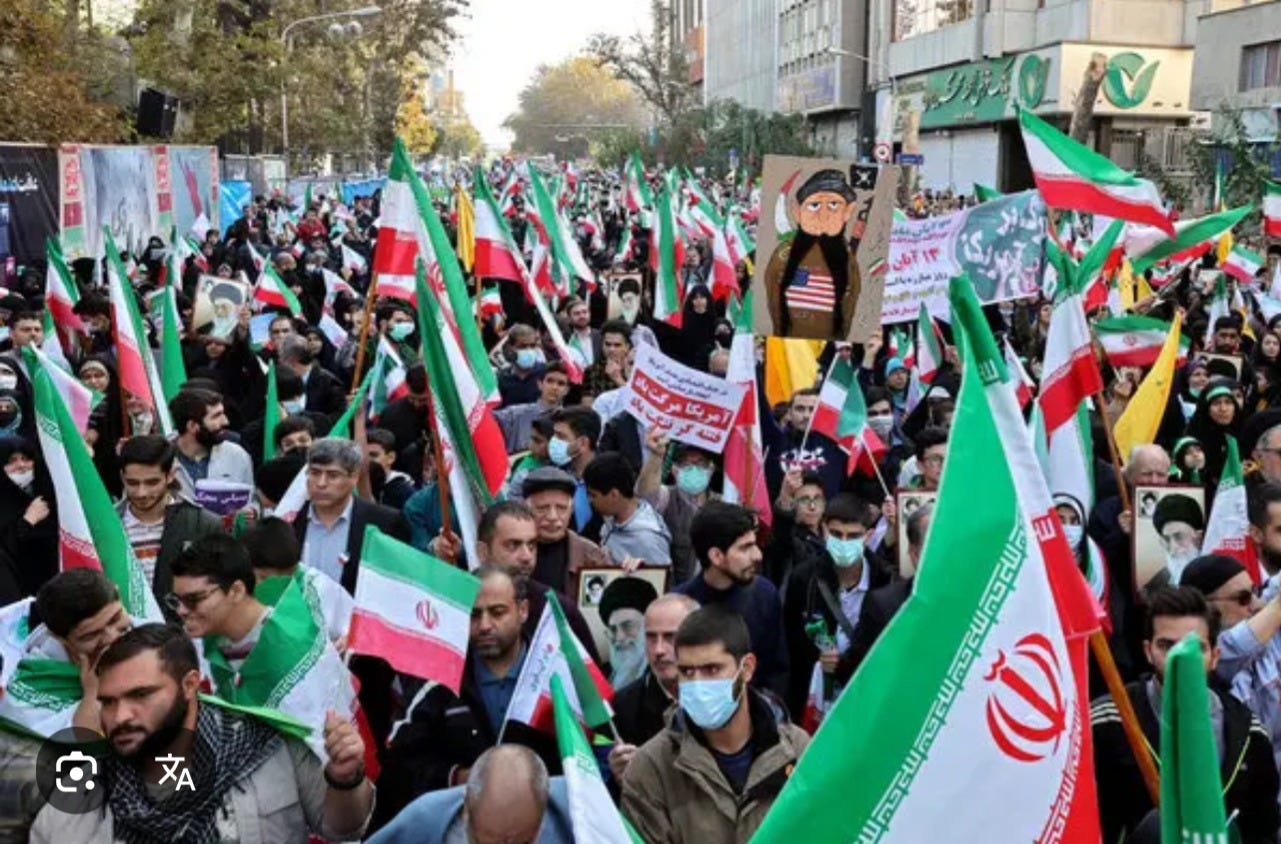
What’s emerging isn’t just protest. It’s political consciousness. When over a thousand protests are reported in cities spontaneously emerge within hours of a tragedy, that’s not organization—that’s culture. That’s a population that has internalized resistance as a default response to injustice.
What this means is the transformation has already begun and it’s not slowing - it’s growing more intense, at the same time the administration is doubling down (Or tripling down as it relates to the size of ICE agents on the street) on unpopular policies.
The economy is getting worse, not better. Violence from the federal government is going to grow, not recede. Antagonistic postures from our political leaders will increase not lessen. Allies around the world are uniting against the global threat that the United States has become.
Here’s what conventional political analysis misses: protests don’t just pressure governments. They also transform participants. Every person who showed up to a No Kings rally or an ICE Out For Good vigil made a decision that changed them. They chose visibility over safety. Solidarity over comfort. Action over complicity.
Those choices compound. The person who attends their first protest becomes the person who organizes the second. The spontaneous gathering becomes the established coalition. The one-time demonstrator becomes the sustained activist. They compel others to do the same and because courage is contagious - the protest activity grows and starts to define the culture and a previously sedentary generation becomes energized.
The rapid mobilization after Renee Good’s death demonstrates this evolution. Organizers used platforms like Mobilize to turn outrage into action in under 24 hours. In cities where routine protests drew dozens, hundreds appeared. But more importantly, those hundreds included people who had never protested before. Who didn’t know they had it in them. Who discovered a capacity for civic engagement they didn’t know existed.
That’s how movements grow. Not through top-down recruitment, but through bottom-up awakening.
The No Kings rallies didn’t just make a statement—they created a new energized constituency. Politicians who previously calculated that resistance to authoritarianism was politically risky suddenly saw hundreds of thousands of Americans willing to take to the streets. That changes electoral math. It creates permission structures for elected officials who want to act but need political cover. It makes courage less costly.
The demonstrations over Renee Good’s murder have already reshaped the immigration debate. Within days, elected officials who had remained silent on ICE abuses were issuing statements demanding accountability. Media coverage shifted from treating immigration enforcement as routine to questioning the fundamental legitimacy of agencies operating with lethal force and minimal oversight. Polling shows that ICE as an agency is historically unpopular.
These aren’t minor victories. They’re the preconditions for structural change.
Civil rights activists understood that the March on Washington wasn’t just a gathering—it was the visible manifestation of years of organizing, coalition-building, and strategic pressure. But it was also the moment that made the impossible seem inevitable. When a quarter million Americans assembled on the National Mall, they didn’t just demand change. They demonstrated that change was already happening.
We’re living through a similar inflection point. The historic scale of the No Kings rallies and the spontaneous nationwide response to Renee Good’s murder suggest something profound: Americans are developing a muscle memory for resistance. Each protest makes the next one easier. Each gathering expands the network. Each action normalizes the idea that citizenship means more than voting—it means showing up.
More than anything the size of the growing protests are the most visible ways Americans can see they are not alone in their anger despite the media’s concerted effort to lie to them and force the talking points of the regime into their social media feeds.
Do protests work? Look at what’s already changed. A year ago, most political observers would have said that hundreds of thousands of Americans wouldn’t take to the streets to defend abstract democratic principles. They would have predicted that a single killing by ICE would generate a news cycle, maybe a congressional hearing, then fade into the background noise of American violence.
Instead, we got the largest protests in American history. We got sixty cities in California alone responding within hours. We got a spontaneous nationwide movement that didn’t wait for permission or organization.
That’s not failure. That’s transformation.
The streets are just the beginning. But they’re the necessary beginning. And right now, more Americans are finding their way to those streets than ever before. They’re discovering that they’re not alone. That their outrage is shared. That their actions matter.
This is what the birth of a movement looks like. Not perfect. Not finished. But unmistakably alive, growing, and refusing to be ignored.
The question isn’t whether protests work - they clearly do. The question is whether we’re ready for what comes next when millions of Americans decide that showing up is no longer optional—it’s now the obligatory price of admission for citizenship in an emerging America.
The No Kings rally in October was attended by 7 million people nationwide! (With additional protests in other countries.) We can definitely get to 12 million! 🇺🇸
I believe Rachael Maddow that protests work!! We have to do it, and it gives us hope!